
Customer story · 6 min read

From legacy systems to one connected operation at Budelpack
Since 1 June 2026, planning, warehousing, production and quality at Budelpack have come together in a new way of working. Business Central handles administration and finance. PackTrackr, developed by Budelpack itself, supports work on the floor. Nohou helped shape the processes and the connection between the two systems.
Returning to a familiar place
Our managing partner Jan Kees Hage has known Budelpack for a long time. He worked there from 1992 to 2007 and was jointly responsible for a significant part of the systems landscape that remained in use for many years. In 2019, Budelpack asked him, then an independent consultant, to help consider its replacement.
That made the assignment special. Some of the systems were ones he had helped build. At the same time, he knew the people and the work behind them. What began as a replacement question grew into a broader decision: which information belongs where, and how do you make the whole setup support the operation?
Not everything in one standard package
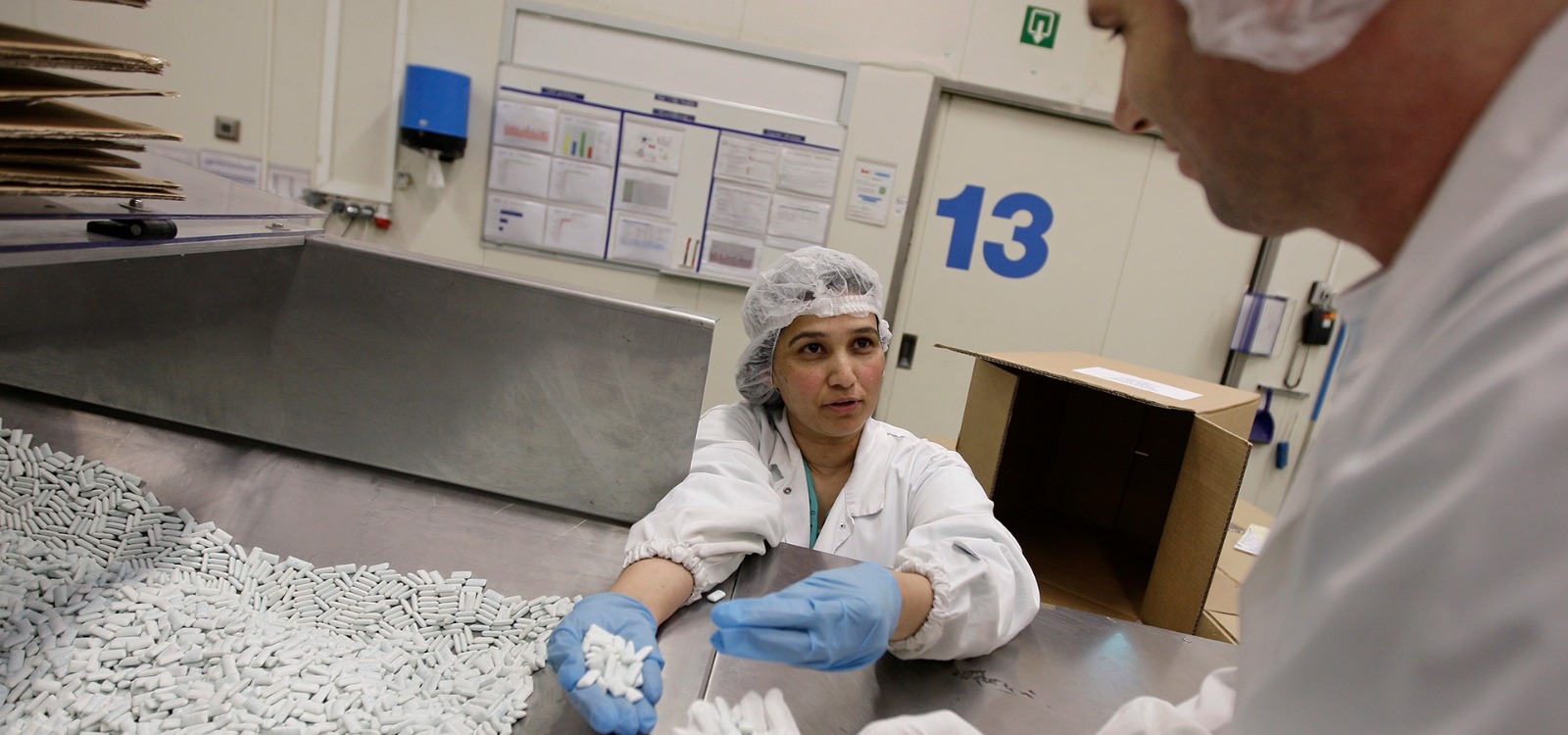
The direction was not clear immediately. Because of the pandemic and the integration of an acquired company, Budelpack did not make a final decision until 2024. In the meantime, several options were explored: Business Central with additional solutions, a combination with MES, and industry-specific software.
Meanwhile, an in-house developer at Budelpack had already built applications for the work floor. Could the organisation build on those? Since custom software also needs maintenance and continuity, Budelpack had the applications independently assessed. Their technical quality and usability provided enough confidence to develop them into one operational application: PackTrackr.
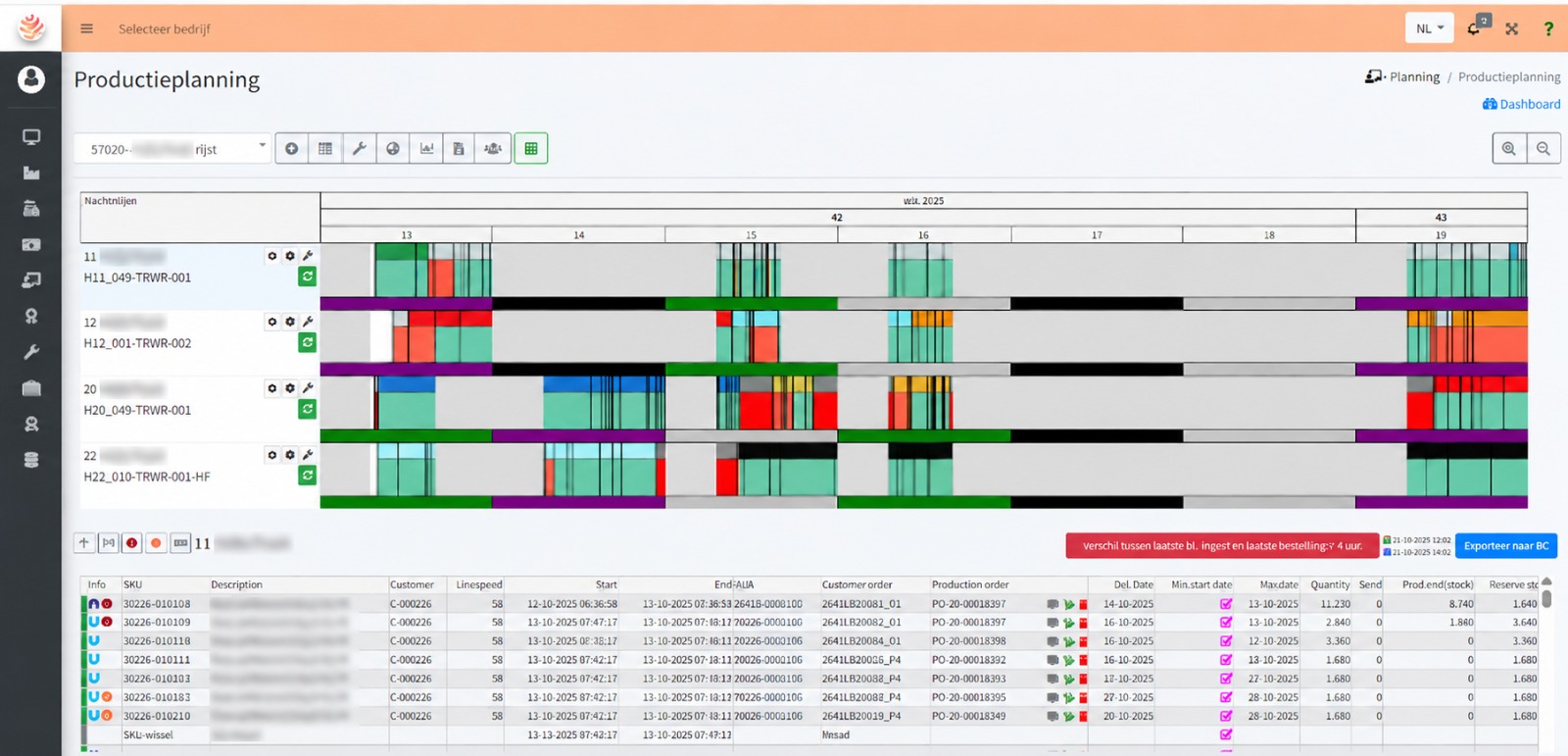
This created a clear division. Business Central became the foundation for administration and finance. PackTrackr supports planning, pallets, batches, warehousing, production, quality and goods flows. Budelpack worked with WSB Solutions to implement Business Central and migrate from Navision.
Work happens on the floor; its effects carry through
Moving a pallet or blocking a batch is a physical action. Its effects must also be correct in inventory, production and administration. This was where the challenging connection between the two systems lay. Variations in consumption, corrections, rework and quality decisions are everyday realities in this environment.
At Nohou, we helped clarify processes and requirements, define the division between the systems and maintain their coherence. We also supported testing, migration and go-live. Budelpack retained ownership of the solution. Process knowledge came from its own organisation, and PackTrackr was developed internally. The close connection between users and the developer was a strength of the project.
Developing faster, while continuing to check
Developing PackTrackr proved more extensive than initially expected. From autumn 2025, the development team increasingly used AI to help with code, error analysis, test scenarios and documentation. At the end of 2025, the developer involved estimated that this saved around half of his development time. This is his estimate, not a measured project result.
During testing and after go-live, AI also helped bring error messages, transactions and code together more quickly. This made it easier to identify whether a problem originated in an action, the data, PackTrackr, Business Central or the integration. Assessment and decisions remained with the people who know the process.
One goods flow, traceable from start to finish
Business Central and PackTrackr went live together on 1 June 2026. The first days were intensive. According to the project team, from the third day onwards, production and warehousing could continue without significant disruption.
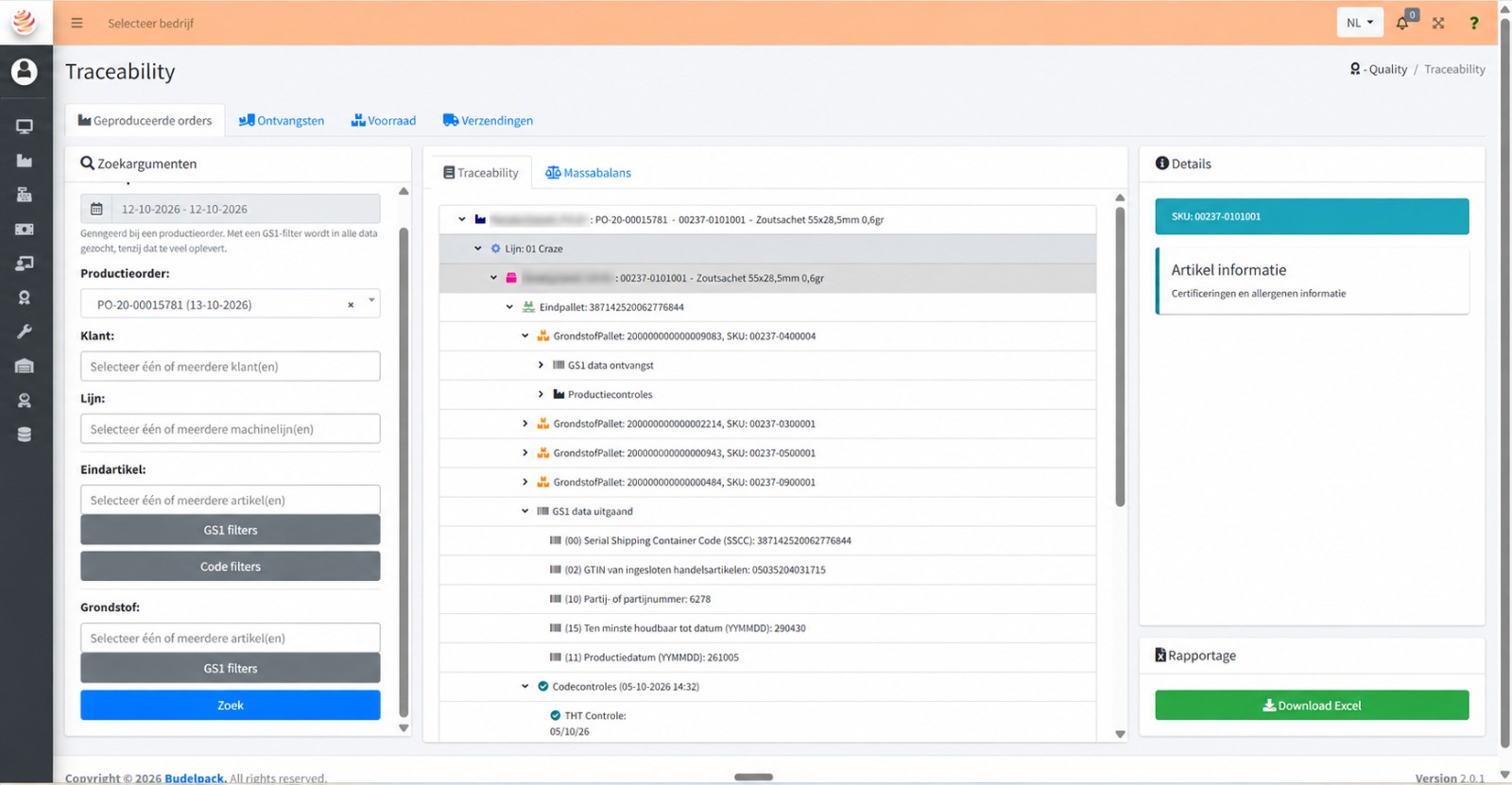
Budelpack now works with a paperless operational environment. Information about pallets, batches, process steps and transport documents can be found through the goods flow. An external logistics partner also uses PackTrackr, so inventory movements outside Budelpack remain part of the same traceable chain. The recorded data is also used as input for invoicing logistics services.
With Business Central and PackTrackr now forming the core, duplicate recording has been reduced. Equally important, checks can take place at the right point in the process, before an error travels further through the chain.
The work can continue independently
For Jan Kees, an important result is not found in the list of features. In the weeks after go-live, his help was needed less and less. The Budelpack team handles questions and changes itself. That was the intention from the start: systems that support the work, with knowledge and ownership retained within the organisation.
Jan Kees knew the old environment from the inside. He now sees different technology at Budelpack, but the same starting point: the operation determines what a system needs to do, rather than the other way around.